VOUS DEVEZ ACTIVER JAVASCRIPT SUR VOTRE NAVIGATEUR POUR VOIR LE SITE DE L'ESADSE. MERCI.
Français | English
Envoyer l'article à un ami

Envoyer

The Higher School
of Art and Design
Two hundred years of history in the industrial arts
Created in 1803 under the name of School of Drawing, renamed Regional School of Industrial Arts in 1884, Regional Art School in 1923, then Higher School of Art and Design in 2006, the Higher School of Art and Design of Saint-Etienne (ESADSE) has been closely linked to the industrial boom and the economical development of the city since its birth. The school has followed the history of industrial arts and puts at stake the tensions that come with it: art and economy, aesthetic and functionality, sovereignty and order, fine arts, applied arts and decorative arts, art and design. In some way, this history is continuing today, but with a determinative inflection. Indeed, if the start of the 2009 school year does not constitute a rupture, it has been a real turning point for the ESADSE.

New buildings
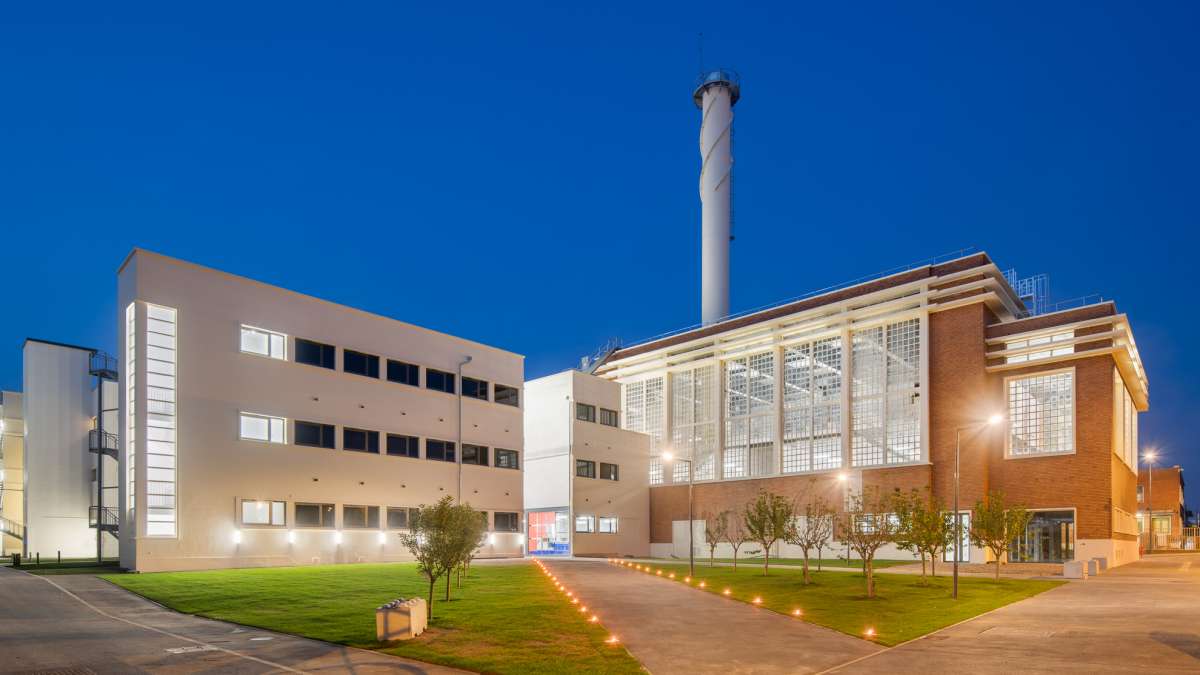
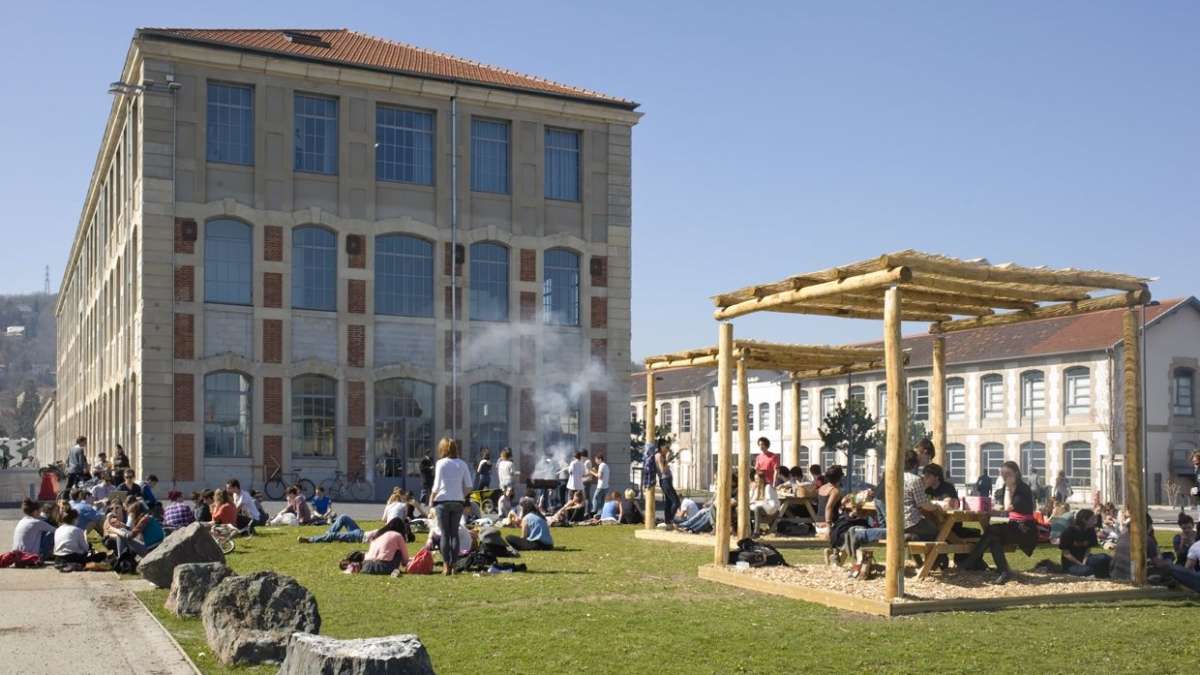
First of all, it is the occasion to use for the first time, after 150 years spent on the historical site of the Ursules hill, what all, teachers as well as students, have called for a few years « the new school », while there were just plans, a building site and a name. A name which was abstract at first sight and then got to be more and more tangible: the name of the Cité du design. Today, the buildings are constructed, ready to welcome their users, 330 students and 40 teachers, in a unique atmosphere and environment in France: two major industrial buildings of the 19th century renovated for the exclusive use of the school; an ambitious contemporary building, la Platine, gathering together the equipments shared with the Cité du design (auditorium, conference rooms, exhibition rooms, a multimedia library, a materials resource centre; and a global project turned towards the higher education, research and experimentation.
New building, new environment: such a new deal has consequently an impact on the organisation of studies and on the School project.

A new organisation of studies and pedagogy
Spreading over 5 years, including a general first year, studies will be organised according to two main options: art and design. The communication option, which existed so far, has been dissolved in order to strengthen the art and design options, considered necessary and sufficient to structure a complete educational offer in terms of artistic courses. Two platforms appears from this dissolution: a graphical design platform, integrated to the design option, and a laboratory Document Tale Image, devoted to the research on image and texts considered under their documentary and fictional aspects.
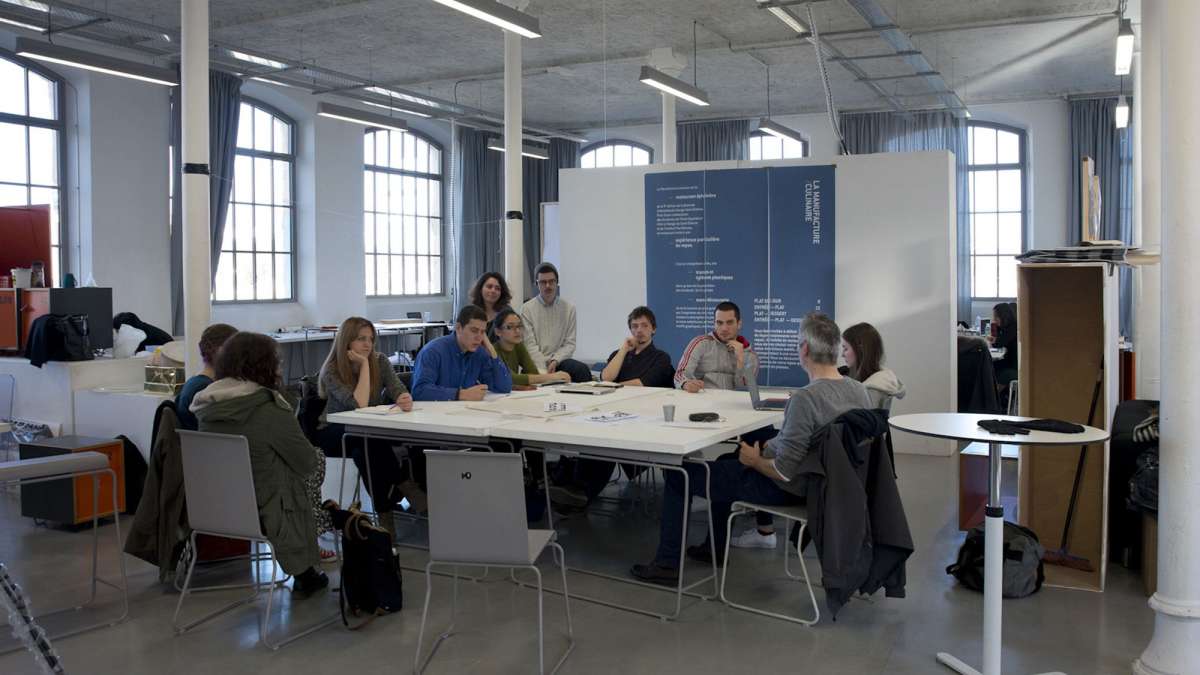
The buildings’ structure also inflects the nature of the courses. Suggesting spacious and functional technical working groups, that structure should also lead to emphasise the part of practice and production in the student’s path.

A new environment for a new project
In addition to new buildings, the ESADSE benefits from a new environment – a real space, ideal for a dynamic and cautious reorganisation of its research and course programmes. Its integration into the Cité du design – international innovation space created on a wide vision of design – fully connects it to the present time’s mutations, that is to say the mobilisation, in the art world’s fields of economy, of values and process, positioning at their forefront creativity and innovation.
Facing such a phenomenon, two orientations or two strategies are possible: approval or criticism. The ESADSE’s new challenge is to allow students to make a choice between those two orientations. In order to carry out this project, the School is learning towards a double scheme: in the one hand, between art and design courses of study, and on the other hand, between the school and the Cité du design.

Art and design
If art and design definitely refer to separate territories in the field of creation, if they are orienting futures and are prefiguring professional paths for students, those two names do not disappear in territorial and professional orientation: they also are polarizing, in brad outline, two main types of positioning confronted to the new issues of creativity.
From the art’s point of view: a position with a critical trend through a work of shapes and process research which are shirking to the general economical mobilisation of creativity while questioning and breaking down this logic.
From the design’s point of view, a position with a consenting trend through a work of shapes and process research which is putting the question of use and lifestyle on the first rank, and is devoting creativity to a more sustainable world, either on the acceptation of the current economical models, or in their reconsideration when they seem to be harmful for the world.

The school and the Cité du design
Research, development and dissemination platform devoted to design considered as a tool for reflection and anticipation of social mutations and economical dynamics. In this regard, it constitutes a remarkable ecosystem for the outlined project’s implementation. It enables the school to benefit from all the stimulus, partners and data that its infrastructures and networks allow to get; and it constitutes an observation and experimentation area in vivo of creativity’s new shapes and issues – that is to say the dream of all art school, and more generally of all establishments aiming to develop experimental research: a world-laboratory.

Research

Strong teaching axis, the economical mobilisation of creativity will also be in the heart of the school researches, conducted in the framework of the Post-Diploma, and in close collaboration with the Creation, Research and Innovation Department of the Cité du design.
Place of projects’ experimentation and elaboration created on a wide and diversified vision of design, the Design and Research Post-Diploma of the ESADSE works at the same time as a creation laboratory and a projects’ incubator. Whatever the field of design in which it is developed (design of object, product or service, graphical, digital or sound design), research is included as a tool of action, distortion and transformation of the real world; and the designer considered as a questioning vector of our lifestyles and our relation with contemporary objects, signs and environments – at the same time indicator of the nowadays mutations and actor of those evolutions.
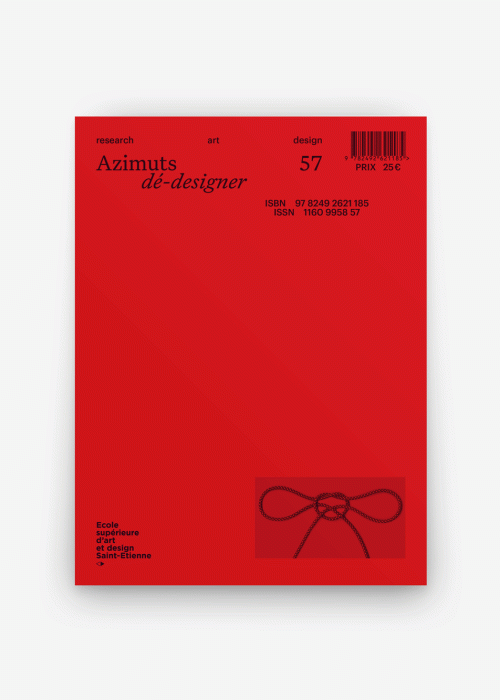
The students – research workers benefit from a research grant, from a devoted work place and can count on the presence of a supervising team including three permanent members, from the Research Department of the Cité and from external members according to the nature of the projects. They also have access to all the resources of the school, human as well as material. The promotion and diffusion of the projects is carried out by the Azimuts review and by various operations developed according to the specificity of the projects.

The reform of the higher artistic education
Those various elements, combined to a vast network of international relations (52 partner establishments all over the world) and private partners, every single one of them stand for an asset in the current context of the reform of the higher artistic teachings, including one of the main issues: the recognition of the grade of masters degree of the diplomas issued by the art schools. After being one of the first schools to implement the European Credits Transfer System (ECTS), the ESADSE is ready to obtain another required condition to give the masters degree: the juridical autonomy. Since the 1st of January 2010, the school and the Cité du design have been converted into a unique Public Establishment of Cultural Cooperation (EPCC).